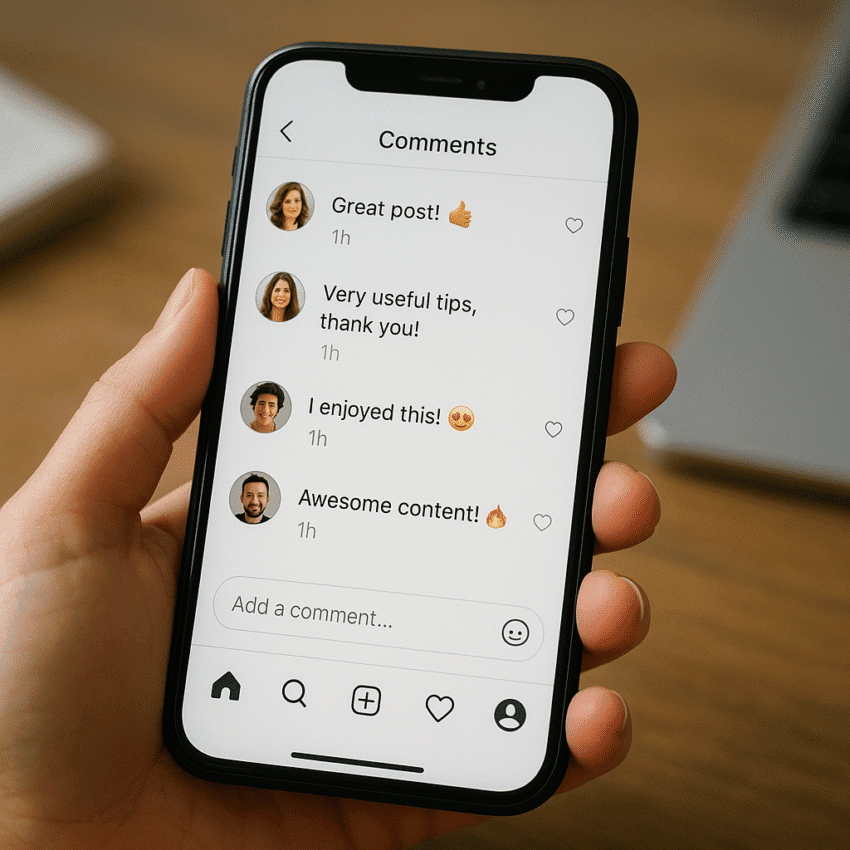
Instagram comments are more than applause at the bottom of your posts—they are public, search-surfacing conversations that tell Instagram who cares about your content and why it should be shown to more people. Treat them as a performance channel, not an afterthought. With deliberate prompts, fast reply systems, and community-minded moderation, comments can compound reach, improve sentiment, and move audiences closer to action.
Why Comments Matter for Instagram Visibility
Instagram has over 2 billion monthly active users, and its discovery surfaces—from the feed to Explore to Reels—must constantly decide what to show next. Comments help do that. In Instagram’s own explanations of ranking, the platform evaluates signals like your activity, the relationship between poster and viewer, and interactions with the post itself. While likes and views indicate lightweight interest, comments tend to reflect deeper intent: effort, thought, and relevance. That makes them a powerful cue for the algorithm and a practical proxy for content-market fit.
A few anchor points help frame the opportunity:
- Scale: Instagram reports more than 2B monthly users globally. Even small gains in comment activity can nudge your content into more feeds at meaningful scale.
- Commercial intent: Around 90% of people on Instagram follow at least one business, which means brand-related conversations are expected and welcome.
- Velocity: Early interaction (including comments) can be a strong positive signal that a post is resonating, aiding broader distribution across feed and Explore.
- Reels momentum: Reels consumption has grown to hundreds of billions of plays per day across Meta’s apps. Comments on Reels—especially thoughtful ones—help separate watch-time from true engagement.
Comments also enrich your content beyond distribution. They shape perception: social proof accumulates in public, objections surface where you can address them, and the best user lines become future copy. In short, comments drive visibility and learning simultaneously.
Crafting Comment‑Magnet Content
Ask specific, answerable questions
Swap vague “What do you think?” prompts for focused, low-friction questions that invite a one-sentence reply. Examples: “Which would you pick—Option A or B?”, “What’s one mistake you wish you’d avoided?”, “Where are you tuning in from?”, “How do you pronounce this brand—A or B?”. The more concrete the ask, the better the response rate.
Design for tension (but not toxicity)
Good comment prompts create a choice, a micro-debate, or a reveal. Try “hot takes” with guardrails: an industry myth you can politely challenge; two viable options with trade-offs; a timeline (“If you had to ship in 24 hours, what would you cut?”). Tension sparks replies; respect keeps them civil.
Use carousels and cut-points
Carousels are great for punchlines on the last slide: “Slide 10 has the spiciest take—agree or disagree?” Reserve a clear space for the call-to-comment and reiterate it in your caption so the audience knows their input is requested. For Reels, place a visual “pause” near 70–80% through the clip—pose your question on-screen, then close with a payoff or example.
Make it personal and relatable
People comment when they recognize themselves. Share a personal fail, a behind-the-scenes moment, or a “learned the hard way” story and invite one in return. Relatability lowers the barrier and raises sincerity—fuel for meaningful conversation and long-term community.
Offer micro‑rewards
Publicly recognize valuable comments. Pin the most helpful answer, reply with a short insight, or invite the commenter to DM for a resource. Small acknowledgments train your audience to contribute in ways that elevate the thread.
Caption frameworks that drive replies
- Poll and pivot: “A or B? Tell me why you chose it.”
- Teach, then ask: “Here are 5 steps to X. Which step do you skip most often?”
- Mistake confession: “I did Y for years—anyone else? What changed it for you?”
- Prediction prompt: “What will be outdated in 12 months?”
- Finish the sentence: “The underrated tool in my workflow is ____.”
Engineering Conversations in the First 24 Hours
Seed the thread
Before posting, send the content privately to collaborators, partners, or your team with a specific ask: “Please answer the question in your own words within the first hour.” Pre-seeding sets tone and depth. Avoid fake accounts or bots; authenticity beats artificial volume every time.
Pin strategically
Use pinned comments to set the bar. Pin a concise summary that restates the prompt and shows the kind of answer you want. Alternatively, pin a high-signal reply (a nuanced take, a helpful resource) to encourage quality over quantity.
Reply fast, expand wisely
Target a 1–2 hour response window for the bulk of replies. Prioritize comments that ask questions, share stories, or challenge ideas. Answer with empathy and a follow-up question to deepen the branch. You’re not closing a ticket—you’re opening a conversation tree.
Leverage stickers and Stories for rebound traffic
Re-share thoughtful comments in Stories with a short reaction and a “Tap to weigh in ↓” sticker pointing back to the post. People love seeing themselves featured; they’ll return with friends.
Use Collab posts to merge audiences
When you co-author with a partner, comment on each other’s post from both accounts. It doubles surface area for your dialogue and cross-pollinates communities without extra production work.
Systematize Comment Operations
Define ownership and SLAs
Create a simple playbook: who monitors which hours, how quickly to reply, and what to escalate. Segment by intent (pre-sales, support, feedback, general chatter) so the right owner jumps in. Decide what earns a DM versus a public reply.
Build response libraries
Keep reusable “conversation starters” and short, customizable answers for FAQs. Rotate language to avoid sounding templated. Save snippets that convert confusion into clarity or transform objections into opportunities.
Tag and track top contributors
Maintain a lightweight CRM of consistent commenters: their interests, previous questions, and purchase status if relevant. Personalized replies show you remember them, which improves retention and loyalty.
Integrate tools without losing humanity
Social suites like Sprout Social, Hootsuite, Later, or Agorapulse centralize comment queues and analytics. Use them to triage and measure—never to auto-comment. Automation is for routing and reminders; people are for voice and nuance.
Community Building and Social Proof
Turn comments into co-creation
Ask for tips, examples, or photos; then feature the best in future posts and credit the source. Co-creation produces content at the speed of your audience and converts casual viewers into advocates. The halo effect improves perceived credibility.
Run comment‑led giveaways responsibly
Giveaways that ask for a comment (“Tell us your best travel hack”) can work—stay within Instagram’s promotion rules and avoid spammy “tag three friends” requirements as your primary mechanic. Quality prompts yield reusable insights; low-effort tagging fills threads with noise.
Host recurring threads
Predictability builds habits. Try “Monday Wins,” “Feedback Friday,” or “Hot Take Tuesday.” Recurring calls create an easy excuse to chime in and establish norms for tone and depth.
Influencer and Partner Comment Strategies
Comment exchanges with purpose
Coordinate with creators and partners to leave substantive comments on each other’s posts when relevant. Aim for additive replies: a missing step, a data point, or a counterexample. Avoid “pods” whose sole goal is volume; platforms devalue obvious inauthentic patterns.
Guest experts in the comments
Announce that a subject-matter expert will be in the comments for the first hour after posting. It concentrates attention, attracts high-quality questions, and positions your brand as a convener of expertise.
Moderation, Safety, and Brand Protection
Great threads require guardrails. Instagram offers keyword filters, the ability to limit who can comment, “Restrict” to quietly limit bad actors, and bulk moderation for spam. Set clear community guidelines in your bio or a pinned Story highlight so expectations are public. Healthy moderation keeps contributors safe and encourages participation from people who might otherwise stay silent.
In a crisis or rapid-fire controversy, move quickly: acknowledge concerns publicly, set expectations for updates, and direct urgent matters to support channels where you can resolve them privately. Keep the thread tidy by removing doxxing, slurs, and clear policy violations—never delete respectful dissent unless it breaks rules.
Measurement: From Vanity to Value
Track beyond counts
Comment totals are a start. More telling are conversation depth (average replies per top-level comment), response time, sentiment trend, and the ratio of substantive to low-effort comments. Tie comments to business outcomes where possible: DM starts, site taps, email signups, or assisted conversions.
Create channel‑specific KPIs
- Comment rate per reach: top-level comments divided by unique accounts reached.
- Quality index: percentage of comments that contain five or more words or include a question.
- Resolution rate: percentage of support-related comments that receive a helpful answer within your SLA.
- Contribution diversity: number of unique commenters per post over time (prevents overreliance on a few superfans).
Run controlled tests
AB-test prompt styles, posting times, and media formats. For example, alternate between a binary choice prompt and an open-ended question for two weeks each, holding topics constant. Use native Insights and your management tool to compare comment rate per impression, not just raw totals.
Advanced Tactics That Compound Results
Comment to DM flows
Many chat tools and the Instagram Graph API support keyword-triggered DM sequences from comments on eligible accounts. Offer a resource (“Comment GUIDE to get the checklist”) and fulfill via DM. This bridges public engagement with private nurturing while keeping the thread lively. Disclose clearly what will happen when they comment to stay user-first.
Pinned FAQs for launches
During product drops, pin a mini-FAQ as a comment and keep it updated. Direct similar questions to that thread and answer visibly so others learn without repeating themselves. When the most urgent question changes (e.g., sizing to shipping), update the pinned content.
Live sessions that feed the post
After publishing a post, go Live for 10–15 minutes to discuss it and invite viewers to leave their best take under the post. End the Live by highlighting one or two existing comments to model quality and send traffic back.
Cross-network loops
Share a provocative comment screenshot on LinkedIn or X with context and a link back to the Instagram post. Cross-pollination recruits new voices and signals that your Instagram threads are worth joining.
Playbooks and Templates
Prompts you can copy and adapt
- Product choice: “If you could only keep one feature, which is it—and why?”
- Process reveal: “Here’s our 5-step workflow. Which step would you automate first?”
- Learning exchange: “We learned X the hard way. What did you learn last quarter?”
- Prediction: “What’s one practice in our industry that won’t survive 2025?”
- Trade-offs: “Faster delivery or more customization—what matters most for you?”
- Self-ID: “Freelancers, what’s your top client red flag?”
- Myth bust: “What ‘rule’ have you broken with great results?”
- Resource share: “Drop a tool under $20 that saves you an hour a week.”
Response scaffolds for tough situations
- Constructive criticism: “Thank you for this. You’re right that [point]. Here’s how we’re approaching it next: [step]. What would you change first?”
- Misinformation: “I can see how that impression formed. For clarity, here’s a source and our current policy: [link]. Happy to answer follow-ups.”
- Support ask: “Sorry you’re hitting that snag. Can you DM your order number so we can fix it today? We’ll report back here once resolved.”
- Boundary setting: “We welcome debate; personal attacks aren’t OK. Please keep it to ideas so everyone can participate.”
Common Myths and Mistakes
- The “first 30 minutes” myth: There’s no single magic window. Early interactions can help, but quality and continued interest over time matter more than a narrow clock.
- Engagement bait: “Comment YES if you agree” can work short-term but trains low-quality behavior. Invite perspective, not compliance.
- Ignoring small accounts: Niche commenters often become power users. Depth beats celebrity when building durable community.
- Over-automation: Bots that spray generic replies erode authenticity and can trigger platform penalties. Keep the human voice.
- Unclear house rules: Without visible norms, threads drift. Publish community guidelines and enforce them consistently.
Implementation Roadmap: A 30‑Day Plan
Week 1: Foundation
- Document your voice and boundaries; enable keyword filters; define SLAs.
- Collect 20 comment prompts aligned to your content pillars.
- Set up dashboards for comment rate per reach, response time, and sentiment.
Week 2: First Experiments
- Ship four posts with distinct prompt types (binary choice, open-ended, finish-the-sentence, teach-and-ask).
- Seed the first hour with teammates and partners; pin model comments.
- Reply to every substantive comment within two hours where possible.
Week 3: Scale and Systems
- Build a response library for FAQs and common objections.
- Launch one Collab post with a partner to merge audiences in the thread.
- Start “Friday Thread” as a recurring conversation ritual.
Week 4: Optimize and Extend
- Analyze which prompts drove the best quality index and conversation depth; prune the rest.
- Test a “comment to receive” DM flow with explicit consent language.
- Feature top community contributions in a carousel roundup; thank and tag contributors.
By the end of 30 days, you should have working hypotheses about prompts that consistently earn thoughtful replies, a lean operating rhythm for response and escalation, and recognizable faces in your threads. From there, tune for efficiency and scale: hire or train moderators, instrument deeper analytics, and roll your best-performing tactics into evergreen playbooks.
Turning Comments into Lasting Advantage
Comments are a live, evolving focus group that also powers distribution. Treat them as a strategic asset: plan for them in your creative process, resource them like a frontline channel, and measure them as part of outcomes. Done well, comment strategy produces compounding returns—better reach, clearer messaging, richer insights, and stronger customer relationships. As you refine prompts, reply with care, and protect the space, you’ll convert passive scrollers into participants and participants into loyalists whose voices carry your message further than any caption alone.
Focus on a few enduring levers—clarity of prompt, speed and quality of reply, safety of space—and you’ll outperform most brands chasing hacks. Over time, the steady accumulation of helpful exchanges builds authority and signals to both people and the platform that your account reliably creates value. That is the quiet engine behind durable growth—and the surest set of benchmarks for success on Instagram when comments are the catalyst.