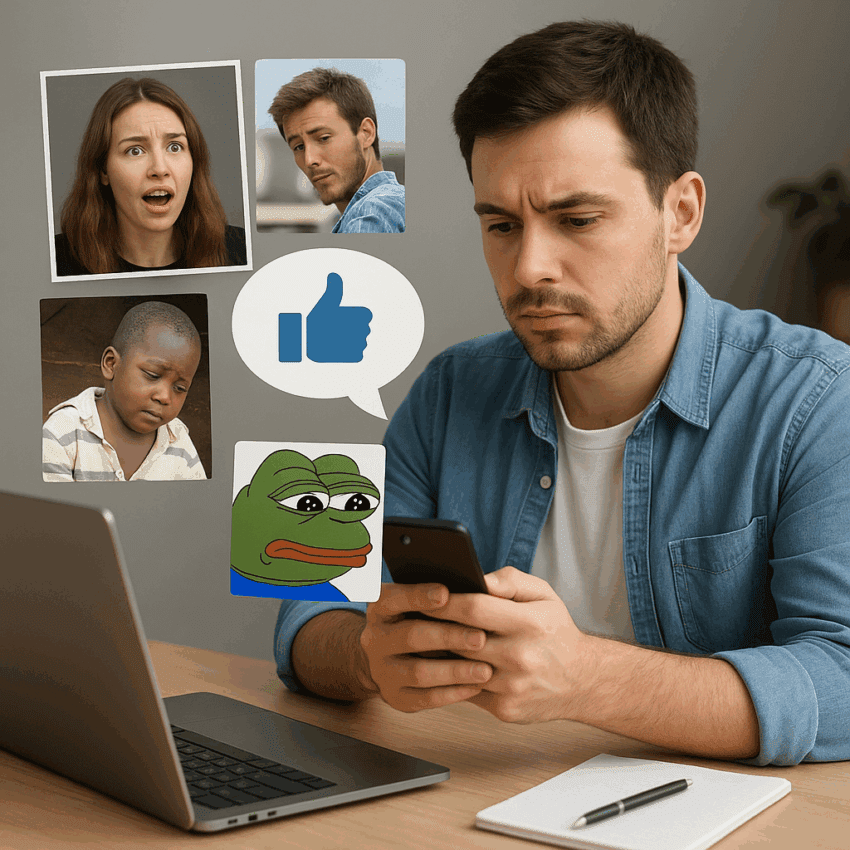
Memes have evolved from niche internet jokes to a cultural shorthand that shapes how people talk, signal belonging, and decide what to click, like, or buy. They compress meaning into a quick visual, a line of text, or a reference that instantly orients the audience. In social feeds where attention is scarce, that compactness is a competitive advantage. For marketers, creators, and platforms, the real question is not whether memes matter, but why they concentrate so much engagement, how to harness them responsibly, and what to measure to know if they’re working.
The psychology behind meme-powered attention
At the core of the meme’s effectiveness is pattern recognition. A meme supplies a familiar template (an image, a sound, a structure), then subverts it with a novel punchline or context. The brain rewards this tension-and-release loop; we enjoy recognizing the pattern and feeling smart for catching the twist. That small cognitive win is enough to move someone from passive scrolling to an active action: like, comment, share.
Memes also bundle social signaling. Sharing a meme says something about identity, taste, and tribal affiliation. It’s a low-friction way to declare “I’m in on this” or “this is us.” That identity reinforcement explains why memes travel quickly through friend groups and topic communities, and why they can jump platforms as users carry them into private chats where dark social activity is harder to measure.
Humor is an obvious lever, but it’s not the only one. Nostalgia, surprise, and a mild dose of controversy can also push a post above the fold. The key is fit: people reward content that feels native to their group norms and current mood. When brands respect those norms—tone, timing, and topicality—they benefit from borrowed virality without feeling exploitative.
What the data says about memes and responses
Quantifying a cultural phenomenon is messy, but several signals consistently show how memes influence social outcomes:
- On Twitter/X, the company has reported that posts using GIFs receive noticeably higher engagement, with widely cited figures putting the lift at up to 55% versus non-GIF posts. While a GIF isn’t always a meme, many memes travel as GIFs, indicating a general preference for quick, humorous formats.
- Youth research firm YPulse has repeatedly found that a large majority of Gen Z and young Millennials share memes regularly; in earlier studies, roughly three in four respondents said they send memes, and over half said memes help them express feelings or ideas better than words alone. This aligns with the observed dominance of meme pages in feeds followed by 13–24-year-olds.
- TikTok’s trend reports emphasize that entertainment and humor are top reasons users engage and share. Meme-native formats—stitching, duets, sound remixes—are built into the product, making it easier for jokes and shared references to propagate.
- On Instagram, meme accounts routinely achieve engagement rates above typical brand pages in the same verticals. While benchmarks vary by niche and audience size, it is common to see viral meme posts exceed the average reach-per-follower multiple by several times when a template aligns with a cultural moment.
- In messaging apps, brands often see “dark” amplification, where link clicks and site traffic spikes outpace visible engagement. Memes are particularly prone to this, since people share them in private threads for a quick laugh or a little social capital.
These patterns don’t guarantee success, but they support a broader point: when a message feels like it belongs to the audience, rather than at them, engagement metrics improve. Humor and cultural authenticity act like multipliers on the same creative budget; the right meme can deliver more interactions per impression than a polished but generic creative.
Platform mechanics and meme-native formats
Each network has distinct distribution mechanics, and memes navigate those mechanics differently.
Static images and carousels remain strong for meme delivery because they are fast to consume and easy to save and share. Carousels increase dwell time and swipe interactions, which can trigger the algorithm to distribute the post more broadly. Meme pages often pair a recognizable template with a brand-safe caption that invites replies or tags. Save rate and share rate are strong indicators of a post’s downstream reach potential.
TikTok
TikTok is a meme generator disguised as a content platform. Sounds, filters, and stitching features create fast replication. A successful meme on TikTok often invites participation—users don’t just watch; they perform their version. The algorithm is extremely sensitive to early completion rates and quick replays, so a concise setup and payoff are crucial. Visual metaphors, POV jokes, and low-fi authenticity outperform highly produced ads unless the production value itself is the joke.
Twitter/X
Memes here hinge on speed and commentary. The half-life of a trending topic is short; templates that react to news or sports can spike within minutes. Visuals (images, GIFs) lift performance, but witty text-only riffs can spread via quote tweets, where the joke becomes a conversation starter.
Memes must fit the norms of each subreddit. Humor can be darker or more technical, and communities reward original participation over brand intrusion. Successful branded memes often come from AMA participation, community-commissioned templates, or behind-the-scenes contributions that feel like fan service, not advertisements.
Professional memes exist—and perform—when they illuminate real work experiences. Light sarcasm about meetings, KPIs, or job search rituals resonates. Image posts with crisp captions and gentle self-deprecation can outperform standard corporate updates, especially when paired with a discussion prompt.
How memes create business value beyond laughs
Memes do more than inflate vanity metrics. They accelerate learning about positioning, speed up feedback loops, and compress complex ideas into memorable handles.
- Message-market fit testing: A meme is a simple A/B test wrapped in humor. When a framing resonates, you’ll see disproportionate saves, shares, and replies. That outcome hints at angles you can carry into landing pages, emails, and product copy.
- Frictionless word-of-mouth: Memes move across public and private spaces with near-zero cognitive cost. In a CAC environment that gets pricier every quarter, content with built-in relevance and humor extends reach without proportionally increasing spend.
- Employer branding and talent attraction: Teams that show personality at a respectful distance from sensitive topics look more human. Candidates often cite brand voice online as a factor in applying.
- Community co-creation: Inviting users to remix templates creates an owned loop where fans propagate narratives you seed, increasing perceived ownership and loyalty.
A practical framework for responsible meme creation
Memes fail when they are rushed, off-tone, or lifted without understanding. A simple, repeatable process helps teams create responsibly and reduce risk.
1) Define the cultural map
List the spaces your audience inhabits: niche interests, shows, games, professional in-jokes, regional humor. Identify the boundaries—off-limits topics, sensitivities, and overused templates. This map protects shareability without sacrificing respect.
2) Choose the right format
- Speed vs shelf life: Time-sensitive memes can win big but decay quickly; evergreen formats build libraries.
- Static vs motion: If the punchline is strictly visual, an image or carousel is faster; if timing matters, use short video or GIF.
- Public vs private: Content crafted to be DM-able (clean aspect ratio, minimal text) travels farther in chats.
3) Write for scanning
Keep captions short. Front-load the joke or the hook. Use recognizable templates sparingly—overexposure reduces returns. Match reading level to the joke; jargon is welcome if it’s the joke.
4) Brand lightly
Over-branding kills the laugh. A small watermark, a brand color accent, or a recurring character is enough. If the brand takes center stage, the audience assumes ad and scrolls past.
5) Preflight for risk
Run a quick checklist: Could this be read as punching down? Does the template have an ugly origin? Are we inadvertently trivializing a sensitive event? If unsure, don’t ship. Reputation risk is expensive and slow to repair.
6) Ship, listen, and iterate
Release in batches and monitor comments for signals. Let the audience teach you which jokes carry the most context and resonance. Retire formats that get eye-rolls, double down on those that generate saves or tags. Small, frequent pivots beat infrequent big swings.
Measurement: how to know a meme is working
Traditional vanity metrics miss important second-order effects. Consider a blended scorecard:
- Primary: saves, shares, profile taps, unique commenters, completion rate (video), replays (shorts), watch time per impression, link CTR where applicable.
- Secondary: branded search lift in the 24–72 hours following a spike, direct traffic anomalies, newsletter sign-ups from social sources, cost-per-engaged-view in paid amplification.
- Qualitative: sentiment analysis of comments, the ratio of meaningful replies to one-word emojis, volume of user remixes.
For attribution, use short-lived UTM parameters, unique discount codes, or dedicated landing pages for major meme pushes. When possible, run holdout tests: withhold a meme from a subset of your audience and compare downstream actions (search, site visits, trials) over a few days. The difference estimates incremental impact.
Legal, ethical, and cultural considerations
Memes are easy to make and easier to misuse. A few guardrails keep efforts on the right side of law and culture:
- Image rights: Some templates are copyrighted or come from films, shows, or photographers. When in doubt, use original assets or stock you’re licensed to remix. On platforms, enforcement may be inconsistent, but brand accounts attract higher scrutiny.
- Attribution: If you riff on a creator’s format or a smaller account’s joke, credit them. It’s good netiquette and reduces backlash.
- Sensitive origins: Some meme images trace back to painful events or private individuals who didn’t consent to virality. Research the backstory before publishing.
- Diversity and inclusion: Punch up, not down. Test with diverse reviewers. A joke that lands in one culture can offend in another; plan for localization or create region-specific variants.
Case snapshots: what success looks like
Several brands have demonstrated repeatable playbooks rather than one-off hits:
- Duolingo on TikTok turned a mascot into a meta character who comments on platform culture itself. The joke is the owl’s exaggerated personality and the brand’s willingness to play along. Result: consistently high view-through and share rates, plus organic press.
- Ryanair used a simple face-filter format to deliver snarky captions about airfare and travel hassles. The consistency of the template, fast reaction to news, and punchy copy created a recognizable meme “voice.”
- Wendy’s leaned into roast culture on Twitter/X. The brand established clear boundaries (punching up at competitors or absurd customer requests) while staying responsive and fast.
- Local small businesses and creators frequently ride regional memes—sports wins, weather quirks, neighborhood in-jokes—to outperform their typical reach with hyper-targeted, low-budget posts.
Common thread: a strong character or voice, fast production cycles, and comfort with playful risk inside clearly defined lines.
Paid amplification without killing the joke
Memes are born organic, but paid can extend their life when applied lightly:
- Boost winners, not concepts: Wait for organic proof (saves, shares) before putting budget behind a post.
- Target for adjacency, not demographics: Aim at interest clusters where the template makes sense; mismatched audiences reduce performance and may invite ridicule.
- Keep creative intact: Don’t cram in additional CTAs or overlays that break the rhythm. If you must add a link, let the caption carry it.
Operationalizing memes in a content system
Memes don’t have to be chaos. Teams that ship reliably tend to:
- Maintain a living template library: A searchable folder of formats, with notes on where they work and when to retire them.
- Document voice and “no-go” topics: This empowers creators to move fast without constant approvals.
- Use a weekly cultural stand-up: Quick readout of trends, potential hooks, and risks across regions.
- Measure with a simple dashboard: Track rolling 28-day save/share rate, mean first-hour interactions, and topline growth of engaged followers. Treat memes as part of a portfolio, not a lottery ticket.
Advanced tactics: templates, timing, and remix loops
To maximize returns, lean into the mechanics that algorithms reward:
- Early velocity: Seed initial distribution through employee advocates or partner accounts at publish time to push the post into the first decision window.
- Caption as a participation hook: Ask for “tag someone who…” or invite users to post their version in replies. User remixes are compounding distribution.
- Time-zone staggering: If you operate across regions, localize the same template with culturally specific references and stagger release to maintain momentum.
- Fast follow-ups: When a meme hits, publish a sequel within 24–48 hours to ride the wave. Variants extend shelf life without exhausting the audience.
Common pitfalls to avoid
- Over-explaining the joke: If it requires a thread to understand, it’s not a meme—it’s a lecture.
- Chasing every trend: Better to be known for a few strong recurring bits than to try to comment on everything.
- Forgetting brand fit: A meme that contradicts your value proposition may win laughs and lose customers.
- Ignoring moderation: Viral memes attract trolls. Prepare response macros, escalation paths, and limits on how you engage.
Global and localization dynamics
Memes are not universal. A global brand can adapt a core template while swapping references, idioms, or imagery. Local teams should be empowered to author their own versions. A centralized content team can provide assets and guardrails, but the best jokes usually originate from people who live in the culture. Measured correctly, local memes increase aggregate reach and drive stronger audience iteration, because feedback happens closer to the source.
AI and the next wave of meme creation
Generative tools lower the cost of experimentation. Text-to-image and text-to-video models can create original, rights-safe templates; caption generators can produce dozens of variations for testing. The risk is sameness—AI can overfit to familiar patterns—so human editors remain crucial. Expect hybrid workflows where AI drafts and humans refine tone, cultural nuance, and timing. As models improve at style transfer, we’ll see communities invent new meme grammars that blend audio, motion, and interactivity across platforms.
Building a durable meme strategy for brands
Long-term success isn’t about any single viral post. It’s about consistency, taste, and trust with your audience. Practical steps include:
- Declare your playground: Choose three to five cultural lanes that naturally connect to your brand and stick to them.
- Define your character: Even without a mascot, your voice can be a character—curious, nerdy, wry, earnest. Document it.
- Set a publishing cadence: Two to four meme experiments per week often balances quality and learning without overwhelming the feed.
- Close the loop: Translate winners into ad creative, email subject lines, landing page headers, or product onboarding jokes. This turns cultural capital into business outcomes.
Why memes keep winning
Memes work because they compress meaning and emotion into a fast, familiar structure. They reward attention with a small payoff and invite participation. In an era of sensory overload, that compactness travels farther and costs less than many other creative types. Combined with data-informed iteration and ethical guidelines, memes can form a durable pillar of a social strategy that is not only entertaining but materially effective in driving awareness, affinity, and action.
Ultimately, the brands and creators who benefit most aren’t those who chase every trend, but those who cultivate a flexible point of view, listen closely to their community, and publish with humility. They recognize that the best memes feel like gifts, not demands, and that respect is the hidden ingredient behind every moment of earned engagement.