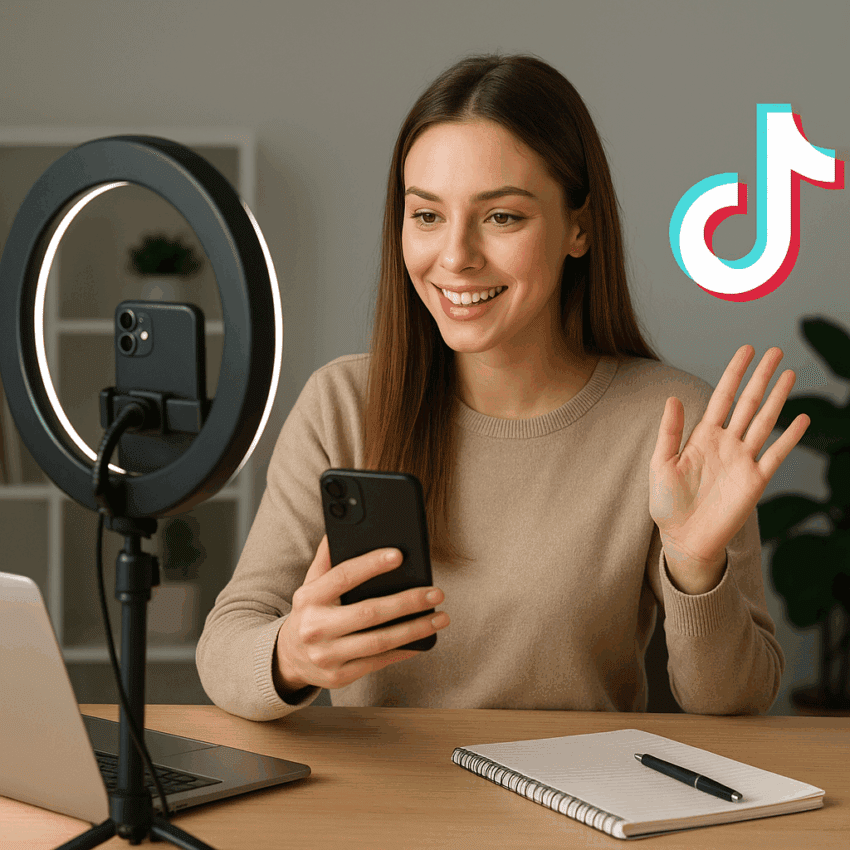
Short-form video has become the closest thing to a universal language in social media. Reels and TikToks move at the speed of culture: they compress ideas into seconds, deliver laughs or insight instantly, and nudge viewers to act right away. This guide distills creative principles, production techniques, and platform-specific insights so you can produce clips that earn attention, spark conversation, and convert. You will learn how to master the opening hook, sustain retention, and shape repeatable workflows that scale your output without sacrificing authenticity.
The platform fundamentals: how Reels and TikTok reward engagement
TikTok and Instagram Reels both prioritize videos that keep people watching, rewatching, and sharing. While their algorithms evolve, their incentives are remarkably similar: maximize time on platform and surface content that satisfies each viewer’s immediate intent. Practically, this means short videos that pull the audience into a clear narrative quickly and sustain micro-interest beats get wide distribution.
Reach and audience potential are vast. TikTok reports more than one billion monthly active users globally; Instagram surpasses two billion monthly users, and Meta has said Reels accounts for a meaningful share of time spent on Instagram (public comments since 2022 indicated around one-fifth or more). Independent analyses in 2023–2024 often estimate daily TikTok usage near or above an hour in many markets, with high frequency of daily opens. These usage patterns underline why even small improvements in watch-through rate can translate into large audience gains.
What the ranking systems tend to value:
- Early watch behavior: first 1–3 seconds viewed, whether a viewer swipes away, and immediate engagement signals (likes, comments, shares, profile taps).
- Completion and rewatch: short videos with 70–100% completion on first exposure often get a second distribution wave; rewatches can act as an amplifier.
- Quality of engagement: shares, saves, and comments are weighted more heavily than likes.
- Behavior fit: content that aligns with a user’s recent interests is more likely to be recommended.
Format and technical baselines:
- Aspect ratio: 9:16 vertical (1080×1920) is standard. Avoid letterboxing or horizontal footage.
- Ideal lengths: 7–15 seconds for fast humor or visual tips; 20–35 seconds for layered how-tos; up to 60–90 seconds for stories and case studies.
- Audio: platform-native sounds, clear voiceover, and music that matches the energy curve of your edit.
- Text: readable on small screens, placed within safe margins (avoid the top/bottom UI areas).
Core takeaway: make videos that are easy to start, rewarding to finish, and compelling to share.
Designing irresistible openings and sticky story arcs
The 1-second rule: earn the next second
The opening frame decides whether a viewer invests attention. Your first second should reveal what they’ll gain or show conflict that begs resolution. Think of your opener as value-first rather than teaser-only. Methods that work:
- Visual shock: jump straight to the most interesting frame or result, then rewind.
- Reverse chronology: show “after,” then promise to explain the “before” and the steps.
- Direct promise: state the outcome in simple language (“Save $300/year by fixing this one leak”).
- Pattern interrupt: unexpected movement, sound, or framing to break scrolling inertia.
Draft hooks with specificity. “3 mistakes killing your sourdough rise” outperforms “Baking mistakes to avoid.” Specific nouns and numbers beat general claims.
Story frameworks that win
- PAS (Problem–Agitate–Solve): name a pain, intensify it with relatable detail, then resolve clearly.
- Before–After–Bridge: show the transformation, then describe how to cross the gap.
- Checklist: 3–5 crisp steps, each with a micro-visual to anchor memory.
- Myth vs. fact: dispel a misconception with a demo or data point.
- Micro-case study: “We did X, here’s the metric, here’s how.”
Use beats every 2–3 seconds to sustain curiosity: new angle, text change, quick zoom, prop swap, or sound beat. These micro-changes prevent cognitive fatigue and support audience retention.
On-camera delivery
- Open with energy 10–15% higher than your natural baseline.
- Use concrete verbs and nouns; avoid hedging phrases.
- Replace long intros with a one-line credential or on-screen subtitle.
- End with a single call-to-action (CTA), not three competing ones.
Visual and audio production that feels native to the feed
Lighting, framing, and movement
Light trumps camera body. Face a window or use a soft key light at 45°. Avoid strong backlight unless it’s a silhouette effect. Use simple compositions: medium shot (chest-up) for speaking, close-ups for details. Add subtle movement—walk-and-talk, push-ins, or slider glides—to add kinetic interest. Good lighting and composition elevate perceived quality and trust.
Phone-first settings
- Resolution: 1080p is enough; 4K can future-proof but increases file size.
- Frame rate: 30 fps for talking, 60 fps for action/transitions.
- Stabilization: built-in or a small gimbal; shaky on purpose only if it reinforces emotion.
- Audio: a lav mic or shotgun improves speech clarity dramatically.
Sound that carries the story
Music should match the energy arc of your edit. Keep voiceover at -3 to -6 dB relative to peak music; duck music under speech by 8–12 dB. Use platform-native tracks when possible for discoverability. For commercial accounts, confirm license eligibility or use TikTok’s Commercial Music Library and Instagram’s available audio options.
Accessibility and visual clarity
- Add burned-in captions or platform auto-captions; many viewers watch on mute.
- High contrast color choices; avoid thin, low-contrast fonts.
- Text safe zones: leave margins around the bottom and top UI areas.
Scripting, editing, and pacing for maximum watch-through
Short-form editing is about speed without confusion. Cut anything that doesn’t serve the promise. Target 140–170 spoken words per minute for clarity. Use jump cuts to remove filler. Alternate A-roll (face) with B-roll (hands, screen, product) to add texture. Introduce motion every 2–3 seconds: a cut, zoom, crop, or text change.
- J-cuts and L-cuts: start audio slightly before the visual change or hold audio past the cut.
- Text sequencing: reveal one idea at a time; avoid overcrowded overlays.
- Pattern palette: assemble a handful of transitions you can repeat (whip pan, snap cut, match cut).
- Endings: craft a satisfying payoff—result shown, summary slate, or CTA.
Keep your typography consistent: one display font for headers and one readable font for body text. Color-code tips, warnings, and steps so viewers can parse quickly.
Captions, hashtags, and metadata that travel far
Your caption’s job is to add context, nudge interaction, and improve searchability. On both platforms, keyword-rich language can increase discoverability, especially for how-to content and local services. Think in terms of lightweight SEO: include the nouns users type (“budget travel Japan,” “sourdough starter fix”).
- Caption length: short (1–2 lines) for humor or visual punch; longer (up to a few sentences) to add utility or story.
- Hashtags: mix 1–2 broad tags with 2–3 niche tags; avoid stuffing.
- Prompts: ask a single, specific question that’s easy to answer (“Which step surprised you?”).
- CTA: one clear action—comment, save, share, click—rather than a list.
Remember the discovery triangle: on-screen text, spoken keywords, and caption keywords should align. Consistent signals teach the system where to place your video.
Posting strategy, consistency, and testing
Quality compounds when paired with reliable output. Frequency doesn’t guarantee reach, but it increases your surface area for luck and learning. A sustainable cadence for most teams is 3–5 posts per week, batched in one or two production blocks. Use a content calendar to mix pillars: education, entertainment, proof (case studies), and personal connection.
- Cross-post smartly: adapt length, captions, and audio libraries for each platform.
- Batching: script 10 hooks at once; film in outfits/locations to diversify a single session.
- Creative sprints: test one variable per week (hook style, pacing, CTA) across 5–7 posts.
- Prime hours: post when your audience is most active, but don’t obsess; the first 1–2 hours matter, yet good content can climb later.
Above all, favor consistency over bursts. Volume plus focus builds intuition, and intuition builds advantage.
Analytics deep dive and the feedback loop
Metrics tell you what to fix. Track:
- 3-second view rate: did the hook work?
- Average watch time: longer than half your duration is a positive signal.
- Completion rate: for sub-20s videos, strong performers often reach 60–90%.
- Rewatches: proxy for novelty or clarity.
- Shares and saves: indicators of value; often better predictors of external reach than likes.
- Profile taps and follows: interest in you, not just the content.
Establish baselines and improve one lever at a time. If 3-second view rate is low, the opening frame and first line must change. If watch time drops at second 4, examine the first cut. If completion is solid but shares are low, sharpen utility or emotion. Use analytics as a creative compass, not a scoreboard; pair data with taste. Over time, a tight cycle of testing and iteration will outperform sporadic bets.
Niches, angles, and 50 content prompts
Pick a niche and map 3–5 angles that repeat well. Angles are lenses: beginner tips, behind-the-scenes, mistakes, teardown, transformation, myth-busting. Here are prompts to spark ideas across sectors:
- Education: “3 counterintuitive rules that made algebra click for my students.”
- Cooking: “The 10-minute pantry pasta that tastes like you simmered for hours.”
- Fitness: “Fix your plank in 15 seconds—3 cues you’ll feel immediately.”
- Productivity: “Stop using to-do lists like this—do this instead.”
- Career: “One sentence that doubled my interview callbacks.”
- Finance: “How to find hidden fees on your bank statement in 30 seconds.”
- Design: “Steal this color trick to make any slide look premium.”
- Travel: “Japan on $60/day: my real receipts.”
- Beauty: “The sunscreen mistake costing you protection.”
- Music: “Turn any loop into a hook in 3 steps.”
- Gaming: “Settings that instantly add 10 FPS on mid-range PCs.”
- Language learning: “5 phrases natives use that textbooks skip.”
- Parenting: “A bedtime script that calms tantrums without bribery.”
- Writing: “The sentence template that makes any story pop.”
- Photography: “Compose like a pro using this one foreground trick.”
- Fashion: “Elevate a basic tee: 3 fits for three vibes.”
- Real estate: “Red flags in listings you can see in 5 seconds.”
- Health: “A breathing pattern that lowers anxiety in under a minute.”
- DIY: “Patch a wall cleanly: the knife angle nobody shows.”
- Entrepreneurship: “A pricing move that lifted our margins 12%.”
- Marketing: “Why this ad hooks you in 0.3 seconds—live teardown.”
- Tech: “Hidden settings that double your phone battery life.”
- Books: “One idea from [Author] that changed how I learn.”
- Mindset: “A reframe that stops procrastination mid-scroll.”
- Art: “Draw hands better using the box method.”
- Pets: “Stop leash pulling with this two-step routine.”
- Nutrition: “Protein math for real meals, not powders.”
- Coding: “Debug faster with this breakpoint habit.”
- Public speaking: “The 3-second pause that wins rooms.”
- Nonprofit: “$500 raised from 30 seconds of video: our exact CTA.”
- Home: “Make rentals feel custom with removable trim.”
- Automotive: “Used car sniff test: 4 smells, 4 problems.”
- Photography 2: “Expose skin tones perfectly with this test card.”
- Skincare: “A routine that won’t wreck your barrier.”
- Crypto/Web3: “Wallet safety 101 you can do today.”
- Science: “Kitchen experiment that explains diffusion.”
- History: “A tiny story that changes how you see [event].”
- Comedy: “Relatable mini-sketch about work-from-home.”
- Education 2: “One trick that makes flashcards stick.”
- Sales: “Email opener that earns replies fast.”
- HR: “Interview question that reveals culture fit.”
- UX: “Heuristic teardown of a popular app in 30s.”
- Film: “Why this cut makes the scene feel faster.”
- Sports: “Footwork drill that instantly improves balance.”
- Crafts: “A knot that fixes 90% of camping problems.”
- Gardening: “Compost ratios with a yogurt cup.”
- Spirituality: “A grounding ritual you can do at your desk.”
- News explainer: “What this policy means for your wallet.”
- Local: “One coffee shop story that built a neighborhood.”
- B2B: “A 20-second demo that wins enterprise buyers.”
Monetization, funnels, and action design
Highly viewed content without a clear action is a missed opportunity. Start with the end in mind: newsletter sign-up, product trial, store visit, or UGC deals. Then reverse-engineer the video to earn that step.
- Soft CTAs: “Comment ‘guide’ and I’ll DM the checklist.”
- Value exchange: “Save this for later” for tutorials; “Share with a friend” for utility or humor.
- Mid-roll CTA: place a small on-screen prompt at the payoff moment.
- Bridge content: one video to educate, the next to offer; don’t pitch every time.
Commerce options evolve quickly: TikTok Shop, product tagging, and link-in-bio tools shorten the path to purchase. Mirror your landing pages to the expectation set in the video—visual continuity improves conversion.
Brand safety, rights, and ethics
- Music: verify usage rights; commercial accounts may need approved libraries.
- Disclosures: label ads and partnerships clearly; trust builds with transparency.
- Privacy: obtain consent for identifiable people; avoid sensitive locations and data.
- Claims: substantiate results; demonstrate, don’t exaggerate.
Ethical creative is defensible creative. It travels further and lasts longer.
Workflow and tool stack
Build a repeatable system from idea to post:
- Ideation: maintain a swipe file of hooks and trends; convert into original angles.
- Scripting: write headline, beats, and CTA; leave room for natural delivery.
- Production: film in batches; capture A-roll and modular B-roll.
- Editing: use templates for fonts, colors, transitions to speed up output.
- Publishing: schedule, tag, and respond to early comments quickly.
- Review: pull metrics 24 hours, 7 days, and 30 days post.
Helpful tools include CapCut, VN, or InShot on mobile; Premiere Pro or Final Cut on desktop; Notion or Trello for calendars; and native analytics plus simple spreadsheets for analytics tracking.
Troubleshooting: why your videos don’t perform
- Scroll-away in first 2 seconds: your opening frame is generic; show outcome first.
- Mid-video drop-off: too many ideas; simplify to one promise and one path.
- Low shares: insufficient utility or emotion; add a surprising stat or simple template.
- Muted reactions: visuals overpower message; improve audio mix and pacing.
- Algorithm fatigue: repeating the same angle; rotate formats and topics.
- Inconsistent branding: viewers can’t recognize you; set a visual identity.
Case-style templates and scripts you can copy
Template 1: Proof-first how-to (20–30s)
- 0–2s: Outcome on screen (“Cut editing time by 40%”).
- 2–5s: One-line context (“I edit 30 videos/week; here’s my system”).
- 5–20s: Steps 1–3 with quick visuals and text labels.
- 20–28s: Recap with checklist overlay.
- 28–30s: CTA (“Comment ‘template’ to get my checklist”).
Template 2: Myth vs. fact (15–25s)
- 0–2s: “Myth: You need X to do Y.”
- 2–6s: Fast demo disproving the myth.
- 6–18s: Two facts with evidence (text overlays, micro-graphs).
- 18–24s: Summary and CTA (“Save this for later”).
Template 3: Transformation story (30–45s)
- 0–3s: After shot or metric (“From 2% to 6% CTR”).
- 3–8s: Stakes and constraint (“No ad budget, 14 days”).
- 8–30s: Three key moves; 3 seconds per beat, with proof visuals.
- 30–40s: Lesson learned.
- 40–45s: CTA (“DM ‘CTR’ for the checklist”).
Trends without losing your voice
Trends provide distribution but can dilute brand if copied blindly. Use trends as containers—map the structure to your message. If a sound is trending for “unexpected outcomes,” pair it with a case study reveal. If a meme format highlights contrasts, adapt it to before/after product results. Keep your tone consistent; your unique point of view is your edge, and consistent storytelling builds loyal audiences over time.
Psychology of engagement and persuasion
- Specificity bias: concrete details feel more credible than generalities.
- Curiosity gaps: promise resolution, deliver quickly, and leave a small question for comments.
- Social proof: show numbers, testimonials, or reactions to build trust.
- Reciprocity: give a tool or template; asking for a small action is easier afterward.
- Fluency: make your message effortless to process—simple words, clean visuals.
Data-backed pointers and cautious benchmarks
While performance varies by niche and region, several patterns are widely reported across creator and brand accounts:
- Short intros outperform long branding sequences; most successful videos brand subtly via visual identity or lower-third text.
- Native captions and clear voiceover correlate with higher completion rates for educational content.
- Reels and TikToks under 30 seconds often see higher completion, but long, well-structured pieces can outperform if each beat adds value.
- Repurposing across platforms works best when you adapt audio rights, caption style, and timing.
Remember: baselines are useful, but your goal is to optimize within your niche. Focus on your own trendlines rather than global averages.
From idea to impact: a 7-day creation sprint
- Day 1: Brainstorm 20 hooks tied to one audience pain.
- Day 2: Script 5 versions of your top 3 hooks; keep one clear payoff each.
- Day 3: Film in two blocks; capture modular B-roll for reuse.
- Day 4: Edit three cuts per idea: 12s, 20s, 35s.
- Day 5: Publish two versions; hold one to compare at a different time slot.
- Day 6: Audit analytics; annotate where drop-offs occur.
- Day 7: Refine scripts and re-cut one underperformer with a stronger opener.
This sprint establishes a habit of testing and continuous improvement—your engine for compounding gains.
Common myths to ignore
- “You must post daily.” Frequency helps practice, but quality and learning loops matter more.
- “Only trending sounds work.” Original audio and strong scripting can travel just as far.
- “You need expensive gear.” Clear audio and good light beat high-end cameras for short-form.
- “Long videos are dead.” Long only fails when it’s padded; concise long-form can win.
Putting it all together
The creators and brands that win treat short-form as a craft, not a lottery. They obsess over the opening frame, make one promise per video, edit mercilessly, measure precisely, and show up with reliable cadence. They respect audience time and repay it with clarity and delight. Keep your message simple, your visuals legible, your captions helpful, and your call-to-action unmistakable. Blend data with taste, and let authenticity guide the choices algorithms cannot measure. With deliberate practice, sharp hooks, disciplined iteration, and smart analytics, your Reels and TikToks will not only reach more people—they will move them.