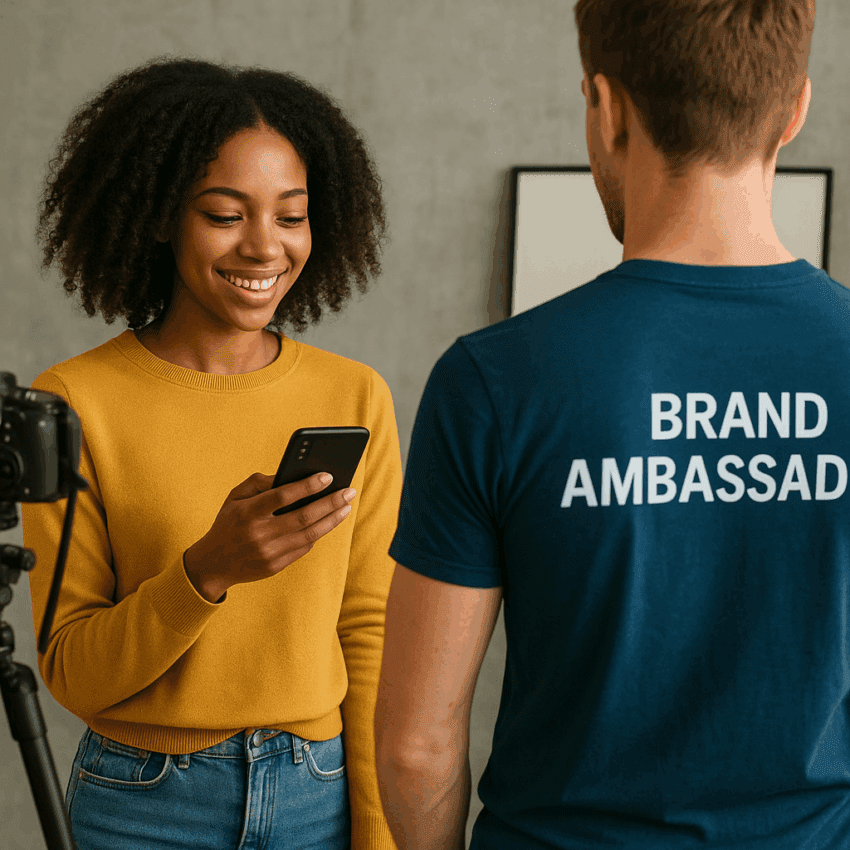
Brand ambassadors turn brand stories into social proof. Instead of one‑off endorsements, they cultivate ongoing relationships that shape perception, spark conversations, and drive action where attention already lives: on social platforms and in peer networks. The most effective programs blend human creativity with systematic operations, so that every post, comment, and share adds up to something larger than a campaign—a durable asset grounded in authenticity, trust, and community.
The strategic case for brand ambassadors in social media
Brand ambassadors are people who publicly support your brand over time, not just for a single activation. They can be customers, creators, employees, industry experts, or partners. Their influence flows from sustained credibility and proximity to real audiences. Several data points underline why this approach belongs at the center of a modern social strategy:
- Nielsen’s Global Trust in Advertising research has repeatedly shown that recommendations from people consumers know rank at the top for credibility, with roughly nine in ten respondents saying they trust them more than other formats. That halo extends to credible third parties who feel close to their communities.
- Stackla’s consumer content report found that 79% of people say user‑generated content (UGC) highly impacts their purchasing decisions, and they view it as more authentic than brand-produced media. Ambassadors are one of the best engines for fresh, rights-cleared UGC.
- Influencer Marketing Hub’s 2023 industry benchmark estimated that businesses earn on average about $5.20 in value for every $1 spent on influencer collaborations—figures that tend to improve when partnerships are long‑term ambassador relationships rather than sporadic posts.
- LinkedIn data indicates that employees collectively have networks roughly 10x larger than their company’s follower base, making employee ambassadors powerful amplifiers for B2B brands.
- Academic research on referrals (Wharton, 2011) observed that customers acquired by referrals exhibit higher lifetime value—on the order of mid‑teens percentage gains—than non‑referred customers. Ambassadors frequently function as structured referrers at scale.
- Platform dynamics reward people more than logos. As organic page reach on major networks declines to low single digits, ambassador content and personal profiles tend to earn more algorithmic distribution through comments, saves, shares, and watch time.
What makes ambassadors distinct from transactional influencers is compounding: repeated visibility, consistent narratives, and real feedback loops. Done right, programs create assets you can repurpose across funnels—from top‑of‑feed awareness to product education to post‑purchase support—while building brand credibility that compounds with each interaction.
Choosing the right ambassadors: people, signals, and fit
Ambassador selection is not a follower-count contest. It’s a portfolio exercise balancing reach, relevance, and reliability. Think in segments:
- Customers: Everyday advocates whose stories mirror your buyers. They supply relatable proof and often the highest comment quality. Ideal for product-led brands, lifestyle categories, SaaS with passionate users, and local services.
- Creators/Influencers: Skilled storytellers who translate features into narratives. Micro-creators (10k–100k followers) often deliver better engagement‑rate‑to‑cost ratios than macro accounts, plus richer interaction in comments.
- Employees: Subject-matter experts, frontline staff, and executives put a human face on your brand and can anchor thought leadership, hiring, and culture narratives—especially potent on LinkedIn, YouTube, and TikTok.
- Experts and partners: Coaches, consultants, researchers, retailers, and complementary software vendors lend domain authority, co‑host educational formats, and fuel co‑marketing.
Selection criteria to apply consistently:
- Audience fit: Do their followers match your ICP by geography, language, interests, and buying power? Ask for platform analytics or use vetted tools to validate.
- Quality signals: Healthy engagement rate for their size; steady growth; limited bot activity; comments that show intent, not just emojis.
- Content style: Story-first, tutorial, lifestyle, entertainment, or technical? Choose creators whose native style aligns with your message while letting them retain their voice.
- Brand risk: Review post history for conflicts (competitor promos), unsafe topics, or disclosure violations. Assess tone under pressure—how they respond to criticism matters.
- Reliability: Timeliness, responsiveness, and basic business hygiene (contracts, invoices, reporting) are make‑or‑break in scaled programs.
Where to find ambassadors
- Social listening: Track product mentions, niche hashtags, and competitor discussions to surface organic fans already posting about relevant problems and solutions.
- Customer lists: Identify high‑NPS customers, top referrers, frequent community contributors, and power users from support forums or Slack/Discord spaces.
- Employee networks: Recruit across teams—not just marketing. Engineers, designers, sales reps, and store staff each bring unique credibility and story angles.
- Event attendees: People who attend webinars, meetups, or trade shows self‑select for interest. Follow up with tailored ambassador invites.
- Creator marketplaces and partner platforms: Use these to manage discovery at scale, then vet manually for brand fit.
Due‑diligence checklist
- Audit last 90–180 days of content for tone, topics, and performance volatility.
- Sample comments to gauge audience authenticity and buyer relevance.
- Check previous brand posts for compliance with disclosure norms and quality thresholds.
- Ask for demographics and top geos; verify with test posts or whitelisted ads if needed.
- Run a small paid‑allowlist pilot to see how content scales beyond organics.
Designing a program that works
Before a single post goes live, define purpose and structure so creative freedom lives inside clear edges. Use this blueprint:
Objectives and KPIs
- Awareness: Reach, unique viewers, share of voice, mentions, search lift, watch time. Optimize for reach and message association before frequency.
- Consideration: Saves, comments with buying intent, DMs, email sign‑ups, time on landing pages, content completion rates. Optimize for engagement quality.
- Conversion: Link clicks, unique codes, affiliate revenue, assisted conversions, trials started, demos booked. Optimize for incremental conversion and blended CAC.
- Loyalty/Advocacy: Repeat purchases, referrals, retention, UGC volume, community participation. Optimize for sustained advocacy.
Value exchange and incentives
- Monetary: Flat fees for content deliverables; performance bonuses for hitting KPI thresholds; recurring retainers for true ambassadors to ensure consistency.
- Product: Seeding, early access, limited editions, and co‑created SKUs that make ambassadors part of the creative process.
- Access: Invitations to off‑site events, roadmap previews, executive AMAs, training, and content production support.
- Impact: Charitable donations in their name, contributions to causes, or community grants that reflect shared values.
- Tiering: Levels that unlock better pay, exclusives, or revenue share as results compound—clear, transparent paths motivate long‑term partnership.
Governance, rights, and non‑negotiables
- Disclosure and law: Follow local rules (e.g., FTC in the U.S., ASA/CAP in the U.K.). Disclosures must be clear and up front, not buried in tags or after the fold. Treat compliance as a brand value, not a checkbox.
- Usage rights: Specify where and how long you can repurpose content (organic, paid ads, email, website). Clarify whitelisting/allowlisting and dark posting permissions.
- Exclusivity and conflicts: Reasonable category exclusivity windows reduce confusion without stifling creator livelihood.
- Morality and termination: Define standards, response windows, and exit terms. Include procedures for corrections or takedowns.
- Data handling: Respect privacy and platform terms; secure storage for performance data and personally identifiable information.
Enablement: briefs that encourage creativity
Provide clarity without scripts. A helpful brief includes audience context, product truths, claims with substantiation, visual do’s/don’ts, and sample hooks. Then grant creators latitude to adapt to their format and community norms. A 70/30 rule works: 70% creator style; 30% brand guardrails. Supply rapid feedback, sample assets (B‑roll, product shots), and talking-point one‑liners that spark ideation. Above all, preserve the creator’s voice to protect credibility.
Content pillars and formats by channel
- TikTok: Quick hooks, jump cuts, demos, stitch/duet participation. Strong for discovery and cultural relevance; measure saves and rewatches.
- Instagram: Reels for reach; carousels for education; Stories for CTAs and product Q&A; Guides for evergreen collections.
- YouTube: Tutorials, comparisons, case studies, and live streams. Ideal for mid‑funnel education and SEO discovery via titles and chapters.
- LinkedIn: Opinion posts, frameworks, customer spotlights, and behind‑the‑scenes clips led by employee ambassadors and expert partners.
- Twitch and live commerce: Real‑time demos, drops, and Q&A. Great for launches and limited editions, with integrated promo codes.
- Reddit and forums: Credibility-first participation. Share experience and evidence; avoid overt selling. Perfect for technical categories.
Activation tactics that compound
- Seeding waves: Ship curated kits with a personal note and optional prompt; never pressure for posts. Track unprompted shares as an authenticity signal.
- Creator co‑labs: Co‑design products or bundles; let ambassadors lead creative direction; build waitlists with exclusive drops.
- UGC prompts: Challenges, templates, or “show us your setup” formats to mobilize broader communities, not just named ambassadors.
- Referral mechanics: Personalized links, QR codes, and single‑use discounts to attribute sales while preserving a clean customer experience.
- Paid amplification: Allowlisting top‑performing posts to scale distribution with precise targeting and creative that already resonates.
- Moments calendar: Anchor content around launches, seasonal needs, and cultural moments your audience actually cares about.
Running and scaling the ambassador community
Think of ambassadors as a product team you serve: recruit, onboard, enable, and listen. The operations layer determines sustainability.
Onboarding that reduces friction
- Welcome kit: Program overview, tone guidelines, disclosure rules, asset library, and a clear content/approval workflow.
- Tech setup: Central portal for briefs, content submissions, payments, and performance dashboards. Make it easy to succeed.
- Orientation: Short video or live call covering brand story, claims they can stand behind, and creative angles that have worked historically.
Community rituals
- Monthly office hours: Share what’s working, new hooks, and algorithm shifts. Invite creators to teach each other.
- Spotlights: Feature ambassador posts on your channels; celebrate milestones; send surprise upgrades or charity donations in their name.
- Feedback loops: Capture product insights from DMs and comments; route to product/CS; close the loop so ambassadors see their impact.
Measurement and attribution
Precise measurement protects budgets and informs creative. Blend qualitative and quantitative signals:
- Content performance: Hook retention at 3 and 8 seconds; completion rates; saves; shares; comment quality; watch time distributions.
- Traffic and actions: UTM parameters per creator and per post; landing-page analytics; micro‑conversions (email/SMS capture, tool downloads).
- Revenue tracking: Unique codes, affiliate platforms, and server‑side event tracking where allowed. Model assisted conversions, not just last‑click.
- Brand health: Share of voice, keyword search lift, sentiment analysis, and creative recall from periodic brand‑lift surveys.
- Cohort economics: Compare CAC, payback, LTV, and retention for ambassador‑sourced vs baseline cohorts. Attribute incremental lift via holdouts when feasible.
Benchmarks vary by niche and platform, so focus on deltas within your own program and creators’ historical baselines. When in doubt, run A/B comparisons at the ad-account or landing‑page level using allowlisted ambassador content vs brand creative.
Risk management and brand safety
- Pre‑approved claims: Maintain a living doc of substantiate‑ready claims, data points, and prohibited phrasing.
- Escalation plan: 24/7 contact path, response templates, and decision trees for pausing content, issuing corrections, or clarifying disclosures.
- Diverse portfolio: Spread partnerships across personas, platforms, and regions to reduce single‑creator dependency.
- Cultural intelligence: Localize examples and humor; lean on regional ambassadors for nuance.
Advanced tactics and integrative plays
Employee advocacy as a force multiplier
Empower employees beyond resharing corporate posts. Provide narrative frameworks—customer wins, day‑in‑the‑life, learning journeys—and coaching on ethical disclosure when discussing products. Track impact on hiring pipelines, sales cycle velocity, and inbound demo volume. The most credible B2B brand stories often start in the feeds of practitioners who build and use the product every day.
Ambassador-led product development
Invite ambassadors into roadmap previews and closed betas. Offer early prototypes with a structured feedback form. Co‑create features or limited editions bearing a creator’s name; the built‑in story drives higher view‑through rates and pre‑orders while surfacing language that resonates with your market.
Performance layering: ambassador content x paid media
- Allowlisting: Run paid from the creator’s handle to retain social proof and comment threads, testing audience lookalikes and interest stacks.
- Creative remix: Turn long‑form ambassador videos into shorts, stories, and carousels. Use top moments as ad hooks.
- Offer orchestration: Align referral codes with ad flights; ensure price parity to prevent channel conflict.
Community-to-commerce flywheel
- Social proof library: Tag and store rights-cleared posts by product, persona, and objection. Deploy across product pages, emails, and chatbots.
- Education series: Ambassador‑hosted live sessions answering FAQs. Clip highlights into evergreen explainers for your help center and onboarding.
- Advocacy tiers: As customers post UGC, invite them into the program with escalating perks, turning fans into formal ambassadors.
A 90‑day launch plan
- Weeks 1–2: Define ICPs, map content pillars, set KPIs, draft briefs, and build a clean tracking plan (UTMs, codes, attribution rules).
- Weeks 3–4: Source 30–50 candidates across segments; run outreach; complete vetting; finalize contracts and rights language.
- Weeks 5–6: Onboard; ship kits; hold a kickoff call; produce anchor content examples; set a shared calendar with soft deadlines.
- Weeks 7–8: Launch first wave; monitor hook retention, comments, and link trails daily; adjust prompts and offers in real time.
- Weeks 9–10: Scale top posts with allowlisting; test two landing‑page variants; introduce tiered bonuses for exceeding KPIs.
- Weeks 11–12: Run a brand‑lift or holdout test if feasible; review cohort metrics; renew top performers on 3–6 month retainers; sunset low‑fit partners respectfully.
Common pitfalls to avoid
- Short‑termism: Treating ambassadors like ad slots erodes relationships and results. Favor multi‑month arcs over isolated spikes.
- Over‑scripting: Heavy-handed creative control flattens personality and tanks performance. Guardrails yes, word‑for‑word scripts no.
- Vanity metrics: Big impressions without downstream actions waste budget. Tie efforts to funnel movement and unit economics.
- Under‑investing in operations: Late payments, confusing briefs, and slow approvals cause churn. Budget for coordination and tooling.
- Neglecting commenter questions: Unanswered DMs and threads equal lost sales. Equip ambassadors with FAQs and a hotline to your team.
- Ignoring platform norms: What sings on TikTok may flop on LinkedIn. Native formats and pacing matter more than cross‑posting volume.
- Compliance amnesia: Weak disclosures create legal and reputational risk. Build review steps and automate reminders.
Playbooks by objective
Launch and awareness
- Creator vignettes showing the problem before the product. Prioritize hook clarity and cultural relevance in the first three seconds.
- Employee POVs on why the team built this solution now. Frame with a human story, not a feature list.
- Seeding to customers who experienced the beta; capture unpolished reactions for Reels and Shorts.
Education and consideration
- YouTube deep dives, comparison carousels, and “what I wish I knew” posts from practitioners.
- Reddit AMAs or forum guides authored by vetted experts, focusing on tradeoffs and alternatives, not just your product.
- Live demos with time‑boxed offers; compile Q&A into a shareable resource.
Conversion and retention
- Personalized referral landing pages per ambassador with social proof above the fold and frictionless checkout.
- Post‑purchase tutorials from ambassadors to reduce buyer’s remorse and boost activation or setup completion.
- Member‑only drops and ambassador‑led loyalty challenges to keep the relationship warm.
Budgeting and forecasting
- Allocate by tier: Reserve 60–70% for mid‑tier creators and power users who drive consistent outcomes; 10–20% for experiments; the rest for production and allowlisting.
- Model blended CAC: Include product seeding, fees, tools, and paid amplification. Compare to paid social and search benchmarks.
- Plan for compounding: Expect lower efficiency in months 1–2 as creative dials in, with gains as top partners renew and content libraries grow.
Ethics and long‑term brand building
Ambassador programs shape not only sales but also brand norms. Anchor them in principles that outlast trends: transparent disclosures, evidence‑based claims, fair compensation, and respect for creator autonomy. Use your platform to elevate diverse voices and share credit generously. Over time, these habits nurture durable community bonds and a reputation for trust that no ad unit can buy.
Conclusion
Effective brand ambassador programs integrate human storytelling with disciplined operations. Select partners for fit, not fame. Enable them with clear briefs and creative freedom. Measure what matters and iterate fast. Protect credibility with honest disclosures and substantiated claims. When you orchestrate these elements across channels—TikTok hooks, YouTube depth, Instagram proof, LinkedIn expertise—you build compounding advantages: broader reach, richer engagement, more efficient conversion, and resilient advocacy. The outcome is not just a collection of posts but a living ecosystem that continuously translates product value into human stories—and those stories into business results through rigorous measurement and unwavering compliance.