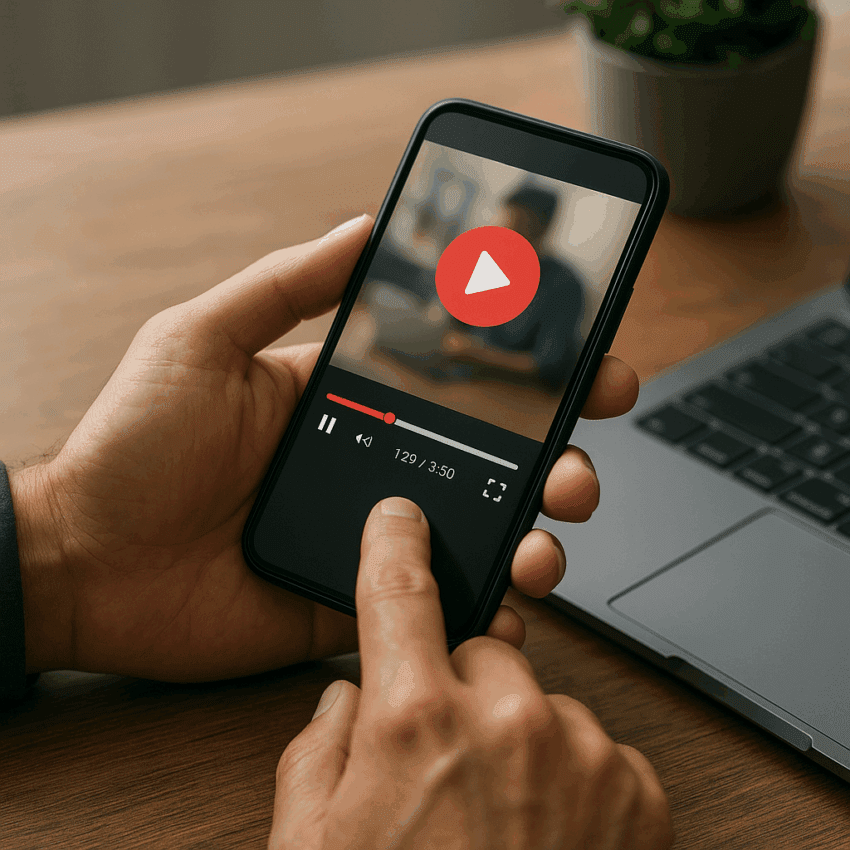
On every major social network, the currency that buys distribution is attention. Platforms reward creators who hold viewers longer because longer sessions lead to satisfied users and more monetization opportunities. That simple incentive explains why improving watch time has become the master lever for growth on YouTube, TikTok, Instagram, Facebook, and LinkedIn. The ideas below combine platform mechanics, editing craft, and audience psychology so you can systematically increase the minutes people spend with your videos—and the minutes they spend with your brand.
Why Watch Time Rules: The Metrics That Matter
While each platform exposes different dashboards, three universal ideas shape video performance:
- Average View Duration (AVD): the average number of seconds viewed per play. AVD tends to correlate strongly with algorithmic reach on long-form platforms.
- Average Percentage Viewed (APV): how much of a video people watch on average, as a percentage. APV normalizes across lengths and is particularly useful when testing formats.
- Session Contribution: time a viewer spends continuing to watch after your video (YouTube’s “viewing session” concept). Creators who extend sessions get recommended more often.
There are a few consistent patterns across social networks:
- YouTube has stated for years that its recommendation system optimizes for expected watch time and viewer satisfaction (including surveys and “Not Interested” signals). In other words, engagement alone is insufficient; the system prioritizes what holds attention and leaves viewers happy.
- Mobile dominates. YouTube has reported that more than 70% of watch time comes from mobile devices. That reality drives creative choices: big type, tight framing, and legible visuals on small screens.
- Early seconds are precious. Retention curves almost always show the steepest drop in the first 5–30 seconds—so what happens first determines how far most viewers will go.
- Subtitles matter. Facebook IQ reported that adding captions to video ads increased view time by around 12% on their platform. Other industry research has found similar gains for accessibility features. Implementing captions is a relatively low-effort, high-return change.
- Length isn’t destiny, but it shapes expectations. Longitudinal benchmarks from Wistia have repeatedly shown that very short videos (under ~2 minutes) can retain roughly 60–70% of viewers, with a gradual decline to ~50% for 6–12 minutes. The takeaway: shorter is not always better—clear value and structure beat raw duration.
Because recommendation engines evaluate how your video performs relative to expected outcomes for its topic and audience, the fastest path to growth is improving early retention and sustaining momentum through the middle—while engineering credible reasons to continue watching or to watch the next video in your library.
Designing Irresistible Openings: Nail the First Five Seconds
The opening determines whether a casual scroller becomes a viewer. Focus on four principles:
- Open with consequence. State the result, transformation, or payoff first. Example: “In 60 seconds, you’ll know which mic sounds best for under $50.” This is a clear hook that answers “Why should I stay?”
- Replace logos and long intros with action. Badges and animations are an instant drop-off driver. If you must brand, do it as an overlay or stinger after tension has formed.
- Show, don’t tell. Lead with the moment of peak curiosity—a reveal, a problem failing spectacularly, or a bold claim backed by a visual demonstration. A text frame summarizing the challenge can work if it’s legible in under a second.
- Front-load novelty. Introduce your most unusual angle or result up front, then rewind or unpack. This flips the script from “sit through setup” to “you’ve already seen why this is worth it.”
Visual-First for Sound-Off Feeds
Many viewers across Instagram, Facebook, and LinkedIn watch muted. Your first frame should communicate meaning without audio—clear on-screen text, expressive motion, and punchy framing. Consider the “three-check” rule for the opening second:
- Is the subject instantly identifiable?
- Is the goal obvious?
- Is the benefit promised?
If you answer yes to all three (visually), you’re ready for feed environments where attention is thin and audio is optional.
Structuring the Middle: Momentum, Micro-Wins, and Story
Once the opening wins the click, your job shifts to sustaining momentum. Think in beats: every 5–15 seconds provide a micro-reward that justifies the next block of time. Three tools make this easier:
1) Narrative Frames
- Problem–Attempt–Result (PAR): State a concrete problem, try approaches (including at least one dead end to build tension), then show the outcome.
- And–But–Therefore (ABT): “We wanted X and we did Y, but we hit Z, therefore we changed A.” This forces causality and cuts fluff, the essence of strong storytelling.
- Before–After–Bridge: Paint the status quo, show the better state, then explain the bridge (your process, product, or technique) that gets viewers there.
2) Pattern Changes
Attention flags without novelty. Vary something every 3–10 seconds: shot size, on-screen text, graphic, demo angle, or speaker. Use cutaways and B-roll to illustrate claims the instant they’re made. Hard cuts beat dissolves for pace in most social formats.
3) Explicit Signposts
Give viewers a map. Progress bars, chapter titles, or ticking counters advertise progress and reduce uncertainty. When people know where they are in the journey—and what’s next—they keep going.
On YouTube, chapter markers (with descriptive, curiosity-inducing labels) also enhance search and skim value, letting viewers jump to what they want while still accumulating time with you.
Editing for Retention: Make Every Second Earn Its Place
- Cut the runway. Delete preambles. If a sentence doesn’t add tension, clarity, or character, it’s likely a cut.
- Start audio early. J-cuts (letting the next clip’s audio start before the picture changes) preserve flow so viewers never feel a “stop.”
- Surface value density. Overlay key stats, steps, or takeaways on screen at the exact moment they’re discussed. Viewers feel they’re learning faster, which earns more minutes.
- Use kinetic text sparingly. Movement draws the eye, but overuse becomes noise. Aim for one purpose per motion: emphasize a verb, quantify a result, or label an object.
- Accelerate, then breathe. Sustained speed fatigues. Alternate brisk sequences with brief rests (a reaction, a silent beat on the result, a still wide shot) to reset attention.
In analytics, look for consistent dips at certain segments. If the drop recurs across videos at the same “type” of moment (e.g., lengthy sponsor reads or abstract theory), retool the formatting of that segment rather than the whole script.
Win the Click Without Sacrificing Watch Time: Titles and Thumbnails
Getting the right viewers to start your video is a prerequisite for high retention. Misleading promises cause early exits and negative feedback. Instead, align curiosity with payoff:
- Titles that promise a transformation (“We Fixed a 20-Year-Old SEO Myth”) tend to beat feature lists (“SEO Myth Explained”). Frame around outcomes, not topics.
- Pair title and thumbnail like a two-panel comic. Let the title set context and the image deliver the twist or the proof. Avoid duplicating the same words in both.
- Compose for small screens: a single focal subject, strong contrast, 3–5 words max. Faces with real emotion often outperform posed looks because emotion previews the story.
Custom thumbnails act as your “packaging” on YouTube and as a split-second promise everywhere else. Test different emotion intensities, background colors, and text brevity to find patterns your audience responds to.
Accessibility, Sound Design, and the Mute-First Reality
Beyond the Facebook IQ finding on captions and view time, multiple platforms have shared that a large share of feed video is consumed without sound. Treat silent comprehension as a design constraint:
- Burned-in captions or styled subtitles reinforce key points and make technical terms unmissable. Don’t rely solely on auto-captions; correct brand names and jargon.
- Sound as a reward, not a requirement. Add satisfying tactile audio (button clicks, whooshes tied to on-screen motion) that enhances without being necessary.
- Mix for mobile. Compress dialog for clarity, and avoid music that fights the human voice. Loudness normalization helps keep viewers from bouncing due to sudden spikes.
Platform-Specific Tactics That Lift Watch Time
YouTube (Long-Form and Shorts)
- Cold open, then context. Lead with a result, then step back to frame the journey. Avoid “Hello and welcome back” intros.
- Promise and pay off repeatedly. Every segment should earn its own cliffhanger: “At the end of this step we’ll know if X works.”
- Engineer session flow. Use end screens to recommend the next most relevant video, ideally the first in a series. Pinned comments can link to deeper dives and timestamps.
- Chapters and mid-roll planning. Chapters make scanning easier; schedule natural pauses for ads so you don’t interrupt peak tension.
- Shorts require even tighter pacing. The first frame must be legible and provocative. Try loop-friendly endings that connect the last line to the first frame so replays feel natural, compounding AVD.
TikTok and Instagram Reels
- Front-load novelty and movement. The feed is hyper-competitive; stakes and motion in the opening frame are essential.
- Text hierarchy matters. Use two layers max: a headline for the promise and a secondary line for specifics. Keep each on screen long enough to read twice.
- Leverage native pacing. Quick punchlines and visual gags spaced every 2–4 seconds can dramatically lift completion rates.
- Series with consistent framing (“Part 4 of 10…”) encourage automatic bingeing, especially if each part resolves something while opening a loop for the next.
Facebook, Instagram Feed, and LinkedIn
- Square or 4:5 aspect ratios fill more vertical space, reliably lifting visibility in-feed.
- Assume mute. Start with bold visuals and on-screen value. Place key information above any UI safe areas so it’s not obscured by buttons or captions.
- Lead with outcomes for professional audiences. On LinkedIn, specific case metrics (“Reduced churn 18% with…” ) earn attention and trust that sustain viewing.
Binge Architecture: From One Good Video to a Great Session
Algorithms don’t just reward long views; they reward creators who keep viewers on-platform. Build for session depth:
- Create themed playlists that map learning paths or narrative arcs. Each video should end with a reason to click the next: an unresolved question, a preview of the next experiment, or a promise to reveal the tool you just teased.
- Use mid-video cards sparingly to avoid interrupting key beats; place them at natural transitions (“If you want the theory, watch this next”).
- Make sequels deliberately. If a video outperforms, produce a follow-up that references and builds on it, then cross-link them.
- End screens with two choices reduce paralysis: “Deep dive” vs. “Related case study.” Clear trade-offs beat a buffet of four options.
Community Signals That Quietly Boost Watch Time
- Predictable publishing creates habit. Consistency trains audiences to allocate time, which increases session starts and total minutes watched.
- Pin comments that clarify a confusing moment or provide quick links and timestamps. Fewer rewinds for clarity means more momentum overall.
- Invite viewer participation that feeds future content. Polls and requests for examples generate clips and comments you can feature, strengthening investment that keeps people through longer segments.
- Use premieres or live sessions strategically. Real-time chat and scheduled starts lift peak concurrency; editing and chaptering the replay sustains long-tail AVD.
Measurement: Turning Data Into Better Creative
Strong creative instincts get you to a good video; strong analytics turn that into a repeatable process. Focus on a few high-signal views of the data:
- Relative audience retention. Compare your video’s minute-by-minute retention to typical videos of similar length. If you outperform at the opening but underperform at minute three, you’ve diagnosed a pacing issue, not a title problem.
- Watch time per impression (YouTube’s “Average view duration x CTR”). Improve this composite by increasing alignment between title/thumbnail and the actual first 30 seconds.
- Traffic-source retention. Viewers from Search often tolerate slower intros than viewers from Suggested or Shorts. Consider alternative cuts for different entry points.
- Cohort analysis. Do first-time viewers behave differently from returning viewers? If returnees stick through slower setup, consider adding a fast “previously on” or a jump-to chapter for newbies.
Treat testing like product development. Iterate one element at a time: opening line, first frame, title, or thumbnail. Where tools allow, run controlled thumbnail tests. On other platforms, rotate creatives by geography or time windows to mimic A/B testing and isolate winners.
Advanced Creative Tactics That Lift Engagement Minutes
- Inverted structures. Reveal the end state first, then time-travel to the process. Viewers already “bought in” stick to understand the path.
- Open loops and pay them off methodically. Tease 2–3 upcoming beats in the first 15 seconds (“I’ll test A vs B, then push to failure, then fix a hidden flaw”). Close each loop before opening the next to avoid fatigue.
- Recurring segments. Familiar micro-formats (e.g., “30-Second Tool Tip,” “The Fail of the Week”) create anticipation and keep viewers parked through transitions.
- Visual scorekeeping. On-screen tallies, timers, and progress meters make time feel productive, which justifies staying longer.
- Callbacks and narrative echoes. Referencing earlier beats rewards careful viewers and invites rewatches.
Production Choices That Quietly Add Minutes
- Framing for mobile. Chest-up framing for talking heads, bold overlays within safe margins, and minimal background clutter reduce cognitive load.
- Lighting and contrast. High-key, evenly lit scenes read clearly on phones. Avoid low-contrast palettes that turn to mush in compression.
- Texture variety. Alternate human faces, hands-in-action, screen captures, and macro details to keep sensory interest high.
- Location anchors. Repeating a set or layout across episodes helps the brain parse context faster, leaving more bandwidth for substance.
Monetization Reads the Room: When and How to Place Promotions
Promotions and sponsor reads are common drop-off points. Reduce friction by integrating them into the value:
- Teach through the ad. Demonstrate the tool in context of the problem you’re solving rather than reading a script in isolation.
- Pre-frame the benefit. “This next step used to take me two hours; with X I’ve cut it to 12 minutes—let me show you.” Viewers accept a pitch when it’s the obvious bridge to the payoff.
- Keep it skippable but earned. If a viewer skips a promo and still lands in high-value content immediately after, they’re less likely to leave.
Team Workflow: How to Build for Retention Before You Hit Record
- Script the first 30 seconds verbatim. This is your “conversion” copy—treat it with the rigor of an ad headline.
- Outline beats, not paragraphs. Label each beat with its purpose (surprise, reveal, question, payoff) so the editor knows where to breathe or accelerate.
- Shoot for options. Multiple angles, clean reaction shots, and cutaways give editors the flexibility to fix energy dips.
- Table read for time. If the read-through exceeds your target AVD by 20–30%, cut preemptively.
Common Pitfalls That Kill Watch Time
- Mismatch between promise and delivery. If the title teases a discovery the video never shows, viewers leave early and feedback signals hurt future reach.
- Overlong preambles. Credentials, context dumps, or “housekeeping” belong after you’ve created stakes—or in the description.
- Visual clutter and small text. If it’s unreadable on a 5-inch screen, it’s invisible.
- One-note energy. Even strong information loses steam without tonal shifts, humor, or surprise.
- Audio fatigue. Harsh sibilance, unbalanced music, or echo will kill longer sessions silently.
A Practical Checklist for Every Upload
- Does the opening frame visually communicate the value proposition?
- Is the first spoken sentence a clear benefit or a compelling question?
- Are there planned beats every 5–15 seconds that provide micro-rewards?
- Have you added styled captions and tested sound-off comprehension?
- Do title and thumbnails work together to promise a concrete payoff?
- Is there a clear next step at the end (end screen, series link) to extend session time?
- Have you reviewed audience retention graphs from the last three uploads and addressed recurring dips?
- Did you test at least one variable per upload to fuel future analytics-driven improvement?
Case-Style Ideas You Can Steal This Week
- 60-Second Results, 6-Minute Breakdown. Post a short showing the transformation, then release a longer cut that deconstructs how you did it. Cross-link them so Shorts traffic converts into long-form sessions.
- Live Edit Overlays. Show your editor’s timeline as a picture-in-picture while explaining three cuts that improved retention, then cut to before/after retention graphs.
- Problem Gauntlet. Attempt three flawed solutions quickly (with humorous failures) before the winning method. The rapid failures create stakes and earn the final reveal.
- Research-to-Reality. Start with a chart or study claim, then replicate or challenge it in a real-world demo. Viewers stay to see if theory survives contact with reality.
Strategic Length: How Long Should Your Video Be?
The honest answer: as long as it remains the most efficient way to deliver the promised payoff. Some guidelines:
- For tutorials and explainers, scope to one transformation per video. If you’re teaching two or more substantial concepts, split them into a mini-series and link them.
- For entertainment or challenges, let tension determine length. If the outcome is uncertain longer, keep going; if it’s “solved,” end fast and tee up a sequel.
- For thought leadership and analysis, deliver a crisp thesis in the first 20–30 seconds, then use labeled chapters to segment supporting points.
Use your audience’s behavior as the arbiter. If 70% of your audience consistently abandons at a certain segment length, that’s a cue to tighten or reformat that block, not necessarily to reduce the total runtime across the board.
Sustainable Growth: Systems, Not One-Off Tactics
Raising watch time is an ongoing craft. Create a feedback loop: script to earn the click and the first 30 seconds; edit to protect momentum; publish with a credible next step; analyze retention and session metrics; and use those insights to change what you do in the first minute of the next video. Over time, a handful of compounding levers—precise hooks, disciplined pacing, clean storytelling, true-to-promise titles and thumbnails, reliable captions, session-extending playlists, and consistent analytics-driven A/B testing—will separate your content from the feed noise and earn what platforms reward most: more minutes with you.